Ostara
What is Ostara?
Ostara marks the Spring Equinox, when night and day become balanced, and the Earth begins to warm and flourish with new life as daylight grows longer.
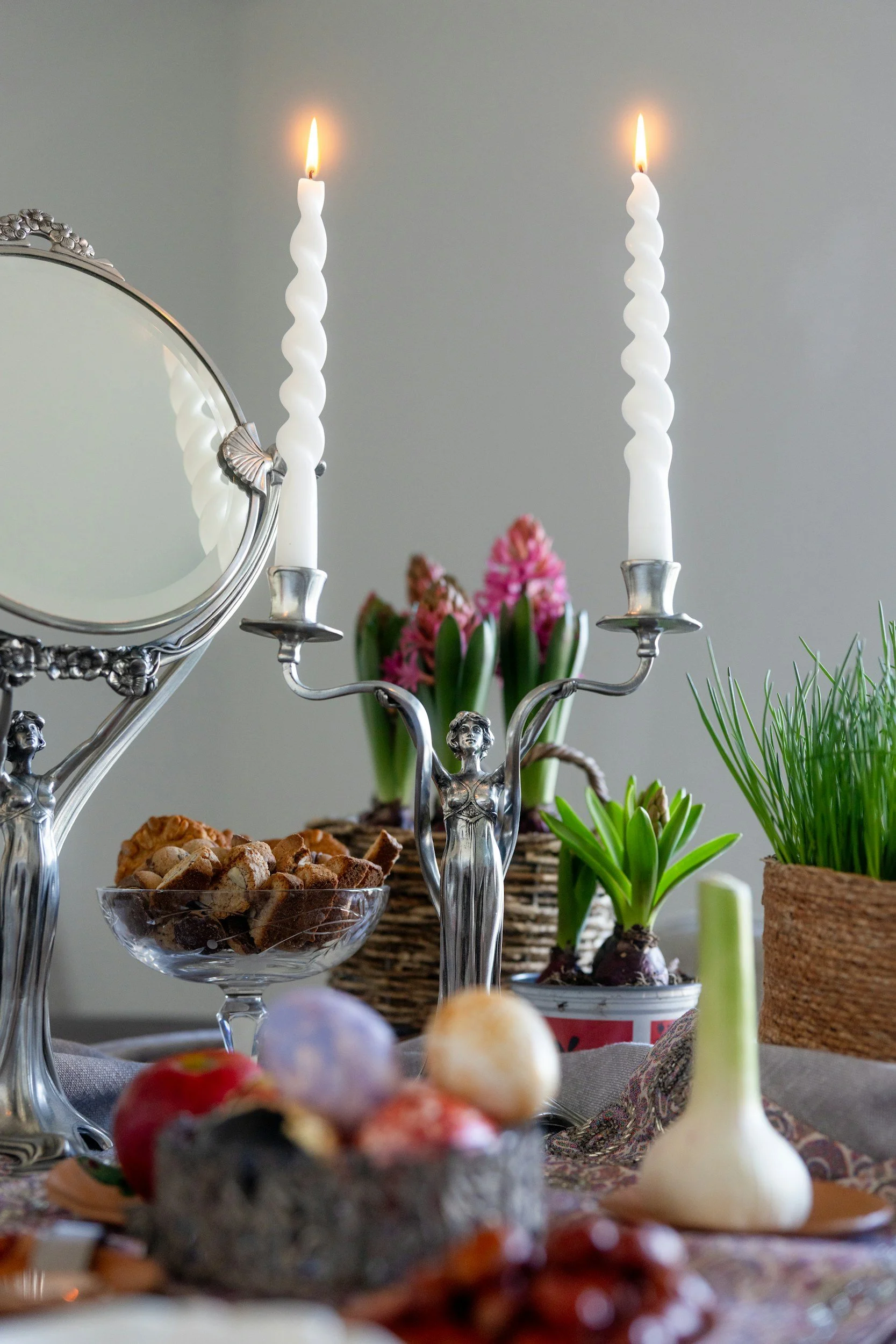
The Spring Equinox
Ostara is one of the eight Sabbats, seasonal festivals that are celebrated primarily by Wiccans and pagans as part of the ‘Wheel of the Year’ celebrations. This yearly celebration is held on the Vernal Spring Equinox, and occurs between the 19th and 22nd day of March, but is usually on the 20th March. Ostara, for many, marks the first day of Spring, as the Earth begins to warm and flourish with life; flowers begin to bloom, and baby chicks and lambs are born. It is one of the most magical times of year.
The Spring Equinox is celebrated as a time of new beginnings with the return of warm daylight. Ostara also represents fertility and new life, and is a time of balance, renewal, light and life. This renewal in life is very commonly symbolised with eggs, flowers, seeds, hares, birds, lambs and spring colours. For some Wiccans and Pagans, Ostara is symbolised by the Goddess Eostre.
Ēostre
Ostara is named after the Pagan Goddess Eostre (otherwise known as Ostara), an Anglo-Saxon Goddess of dawn, rebirth, fertility and Spring.
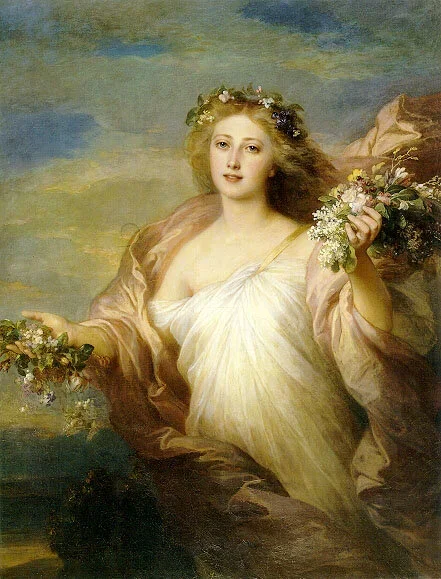
The Goddess of Spring
The earliest written mention of Eostre is from the English monk Bede, who wrote during the 8th Century that pagans would hold a feast in honour of a goddess during Ēosturmōnaþ (April), which would become the Goddesses name, which later influence the holiday name for Easter.
Eostre has a strong association with hares, as hares were regularly seen in gardens during Spring. People would often confuse hare nests with the nests of birds, which led some people to believe that hares would lay eggs during Spring. Hares then became associated with eggs, as well as symbols of their high fertility. Children would look for ‘hare nests’ to collect eggs from, which would eventually inspire the mythological figure of the Easter Bunny and Easter Hunt traditions.
Egg-laying Hares
There are many folktales of Ēostre, particularly involving egg-laying hares. In ancient cultures, hares were seen as divine messengers of the gods, and could traverse through the spiritual realm to our own. This may have influenced the English superstition of hares being messengers for witches, including the many tales of infamous Yorkshire witches turning into hares. While they may have fantastical tales, real women were convicted of witchery for simply having a hare sighted at night in the gardens of old women.
The hare is a symbol of fertility, due to its randy nature (particularly during Spring) and high fertility. It is no surprise that a fertility deity of Spring would share a connection to the hare…
Ēostre and the Hare
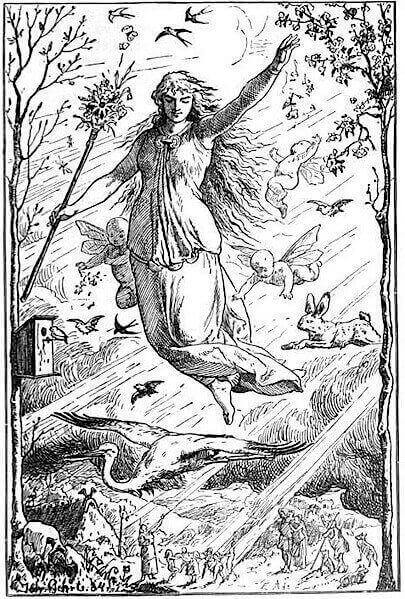
The Goddess and the Hare
There once was a hare who lived in his little hare hut. Every year, the hares would offer gifts to the Spring Goddess Eostre, whom they loved very much. The hare had decided that this year, he would offer a very special gift for the Goddess, to show how much he loved her. For the whole of Winter, the hare toiled in pursuit of the perfect gift, travelling far and wide to find the greatest treasure. Despite his best efforts, the hare had found nothing and had but a single egg left in his possession for lunch.
The hare felt such great shame that he had nothing to offer, so he crushed the petals of flowers to make paint, and painted the egg to make it look like a treasure.
The first light of spring came, and the hares gathered with their gifts to offer the Goddess.
Eostre came to visit her favoured creatures, and the hares all gave her gifts of various treasures. But when the hare approached Eostre with his painted egg, the hares all laughed and mocked him for his simple gift. The hare explained that it was all the hare had left, but felt great shame. But the Goddess took the painted egg with great pleasure and declared that it was the greatest treasure of all. She declared that everyone should experience the joy she felt and asked that, instead of offering her treasures, they give the greatest treasure to all her children. So every year at the beginning of Spring, the hares would paint eggs and leave them for children to find, so that they too could experience the joy of Spring.
Another tale tells of how Eostre finds a dying bird in the winter cold. The Goddess takes pity on the bird and gives the bird new life by transforming the bird into a hare. Through the Goddess's magic, the hare can lay colourful eggs. The hare is grateful to Ēostre that every year, the hare offers its brightly coloured eggs to her as appreciation for the hare's new life.
Celebrating Ostara
Ostara is considered a very powerful time of year for witches, wiccans and pagans. It is during this celebration that deities cross the lands to sow the seeds of life into the Earth, leaving an abundance of light and energy to create new life. Practitioners of witchcraft often do rituals and spells for renewal, fertility, growth and abundance. As with other pagan celebrations, Ostara is traditionally celebrated with a great feast. Many Wiccans and practitioners of witchcraft decorate altars with eggs and hares as fertility symbols, as well as flowers and symbols that represent life and new beginnings. Goddess worship and symbols are also popular, as Goddesses often embody Spring and life, such as the Mother Goddess, Eostre, Persephone and Brigid.
Ostara Celebrations
There is no ‘right way’ to celebrate the Spring Equinox, and anyone can choose to celebrate if they wish to. Most Holidays and Celebrations stem from people wishing to bring some joy into their lives and have something to look forward to. Here are some suggestions on how you may want to celebrate this occasion:
Spring Cleaning - Cleaning is not exactly what most people consider a ‘joyful’ task, but a clean and tidy home can do wonders to help you refresh. A spring clean brushes away old stagnant energy and welcomes in good luck.
Decorate your house - Decorating your home with spring crafts, such as pastel bunting or Spring flowers, can help you feel more attuned to the season.
Egg Painting - Painting eggs is a fun, creative way of decorating your home. You can even make clay eggs or paint ceramic eggs if you don't wish to use real eggs.
Make a Spring Wreath - Making wreaths can be fun and relaxing, as well as creating a beautiful decorative piece for your front door or wall, and welcoming positive energy into your home.
Bake bread - Bake some fresh Ostara bread for your feast, such as orange soda bread, lemon poppy seed bread or even some hot cross buns.
Hold a Feastor Picnic- As with old pagan traditions, hold a feast with close ones with seasonal foods, such as a spring stew with Nordic flute bread with sunflower seeds. Alternatively, a lovely day out in the sun for a picnic is a lovely way to spend the Spring Equinox.
Throw Seeds or Grow a New Plant - Spring is one of the best times to grow a new plant. Having a plant indoors has been scientifically proven to boost mental health, but planting a flower during Ostara can help you manifest prosperity. Alternatively, you can buy seeds or a seed bomb and spread them outdoors. The bees will thank you!
Create an Altar Space - Make an altar space and decorate it with Spring decorations. You can find further down below suggestions on how you can decorate your altar for Spring.
Ostara Rituals
New Beginnings
It is an ancient tradition to cleanse your house and hearth of soot at the beginning of Spring. This cleansing was, of course, necessary for keeping the home clean, and because long-term exposure to soot is unhealthy. But on a spiritual level, this action of clearing away soot and debris is to clear away the stagnant energy of winter, and welcome in new energy for prosperity and good luck. This is where we get the concept of doing a spring cleaning from.
But you do not need to do a whole house cleaning, and you can instead perform a very simple ritual with just a broom. A broom is highly recommended as it is more traditional, but if you don’t have a broom, you can use a brush instead. To perform this ritual, all you need to do is grab your broom (or brush) on the day of the Spring Equinox and open your front door. With sweeping motions, imagine you are brushing out old energy with your broom, and out of the front door. Thats it!
Many practitioners of witchcraft will perform a similar ritual before every spell; they will use a small broom to brush their altar or spiritual space before they begin. It is the same concept of brushing out old energy to welcome in the new.
Cleansing Tools
Over time, your tools begin to soak up energy like a sponge, which can interfere with your spellwork or ritual. There are many ways witches do this, and all witches have their own preferred methods. Witches often cleanse, recharge and consecrate tools during Spring and Ostara, and the energy from the earth is at its peak during this time.
A simple way to cleanse and charge your tools:
In a basin, put a pinch of sea salt or Himalayan salt into lukewarm water and gently wash your tools (Be sure to do your research and make sure that your tools are suitable for a saltwater bath, as not all materials are suitable, including some crystals. If not, simply leave this step and head onto the next step)
Leave your tools out in a garden or on a windowsill to soak up sunlight during a sunny day, charging your tools. Some witches prefer to charge their tools under the moonlight, and if you have one, use a selentie plate to strengthen the energy.
Smudge your tools with cleansing herbs such as rosemary, sage or lavender, wafting smoke over the tools to purify and banish any unwanted energies (be careful of any flammable materials).
Consecrate your tools by placing them on a circle or pentacle. With an athame, a wand or your finger, draw a circle around the tools. Hold them to your chest, close your eyes, and take a deep breath in and out, feeling the connection between you and your magical tool.
Manifestation Ritual
A quick, easy-to-do ritual is a simple manifestation ritual. You can do this indoors (ideally in front of your window), but this ritual works best outside in the sunlight.
Sit with your legs crossed and arms resting by your sides. Close your eyes and throughout the duration of this ritual, breathe slowly in and slowly out. With each breath, try to clear your head of thoughts and relax your body with each breath. Visualise breathing in good energy from the sun into your body, and breathing out old stagnant energy for a good minute at least.
Chant the words ‘I am loved, I am wonderful, I am important’ - These affirmations can feel hard to do, but saying positive affirmations to ourselves out loud regularly can help improve our own sense of worth. This step is important, as self-belief is important for manifestations.
Chant the words ‘I call upon the sun (or a deity if you wish), I wish to manifest…’ and say what you wish to manifest. For example, ‘I call upon the sun, I wish to manifest good luck into my life’. Take a few more breaths and focus on your intention, and visualise your manifestation. When you open your eyes, the ritual is complete.
Ostara Spells
The Spring Equinox is the best time to do spells, as the Earth is at its most potent with energy at this time. It is a great time to do fertility, renewal, prosperity, manifestation, love and happiness spells. One simple step before doing any spells is to perform the chant below:
“I call upon air and fire
Earth and water alike;
Bring magic and blessings my way
On this Ostara night!”
Here are some more suggestions on spells you can do during Ostara:
Nine Knot Spell
A nine-knot spell is a very ancient spell to manifest intentions and wishes, and one of the most performed spells. All you need is a piece of string or rope. I highly recommend using a string that you can tie around your wrist as a bracelet, and lighting a white candle while doing so.
Focus on your intention and chant as you tie each knot:
The spell has begun
It cometh true
Thus it shall be
Strengthen more
So may it thrive
The spell is fixed
The stars above
The hands of fate
This is Mine
Afterwards, you can wear your string as a bracelet to strengthen your magic.
Fertility Ritual
This fertility spell stems from the ancient ritual of burying an egg for fertility. While it is a very old spell, it is also very simple to do:
Draw a face on an egg, or with natural materials such as clay, while imagining a child you wish to bring into life. Bury the egg and call upon a fertility deity of your choice. Eostre, Freyja, Venus Aphrodite, Ishtar, Parvati, Chandra, Gaia, Artemis, and the Mother Goddess are just a few examples of fertility Goddesses and deities from various cultures.
The best place is to bury your egg in your garden, but if you do not have a garden, burying your egg somewhere special to you will suffice. If you are using an egg alternative, please be sure to check that it won’t harm the local wildlife.
Decorating Your Altar
If you have an altar or spiritual space, decorating your altar in tune to the season can help strengthen your intention. Here are some suggestions for how you can decorate your altar:
Flowers - Lavender, bluebells, daffodils, crocus, primrose and tulips.
Herbs - Lemon peel, sage, dandelions, thyme, mint, basil, lemon balm, lemon verbena and rose petals.
Essential Oils - Ginger, ylang ylang, lavender, lemongrass, jasmine, eucalyptus, lemon balm, lemon and sweet orange.
Symbols - Eggs, hares/rabbits, the Sun Wheel, Sprial Goddess figurine/doll, lotus flower, tree of life, the Green Man, birds, and butterflies.
Crystals - Citrine (prosperity), aquamarine (refresh), moss agate (new beginnings), clear quartz (cleansing), rose quartz (invite love), aventurine (growth), jade (luck) and carnelian (creativity).
Spell Candles - Using beeswax candles with colours such as white, yellow, green, purple and pink.
Other - Incense (cleansing scents such as lemongrass), Selenite (recharge your altars and crystals energy), Himalayan salt (purify your altar), bells (clear energy), offering bowl (offer gifts such as honey to a Goddess or fertility deity), Spiral Goddess altar doll, penny (for luck and good fortune) and painted eggs.
Ostara is a magical time of year, and celebrating the Spring Equinox, as well as other seasonal festivals, can help you feel reconnected with nature. In a world that can feel chaotic, taking the time to appreciate the beauty of nature and celebrate life can help you feel reconnected to yourself and bring light during times of darkness.
There is no right or wrong way of celebrating Ostara; what matters most is taking the time to bring joy into your life and appreciating the little joys life has to offer.
Keywords:
Sabbats - The Sabbats consist of eight seasonal festivals that form ‘The Wheel of the Year’. They mark seasonal milestones that are celebrated by many Wiccans and pagans. There are four solar events and four fire festivals that make up the eight Sabbats.
Wheel of the Year - An annual cycle of seasons with eight celebrations, known as Sabbats, to mark the passing of seasons that forms a circular yearly calendar.
Equinox - Two Equinoxes occur yearly to mark the days when day and night are (almost) at equal length. The Spring Equinox marks the beginning of Spring.
Wicca - Wicca is a modern religion focused on nature-based practices with roots in Paganism and Witchcraft. Wicca was introduced by Gerald Gardner in the 20th century after his encounters with a witches’ coven. Wicca is a non-dogmatic religion with no strict set of beliefs, but most often follows the Wiccan Rede of ‘an it harm none, do what ye will’.
Paganism - A term that was used by early Christians for religions outside of Christianity, Judaism and Islam, otherwise known as the ‘religion of peasantry’. Paganism is a very broad definition for many folk religions, but modern paganism is often referred to as ‘neopaganism’, a nature-centred belief with roots in folk religion. For some, they consider it their religion; others consider it a way of life or a set of beliefs.